Regional Water Planning Council Orientation

State Water Plan
Georgia’s future relies on the sustainable management and protection of the state’s limited water supplies. The 2004 Comprehensive State-wide Water Management Planning Act mandated the development of a state-wide water plan that supports a far-reaching vision for water resource management.
Welcome Video: Mark Masters, Director Georgia Water Planning and Policy Center, Albany State University
Over Two Decades of State Water Planning
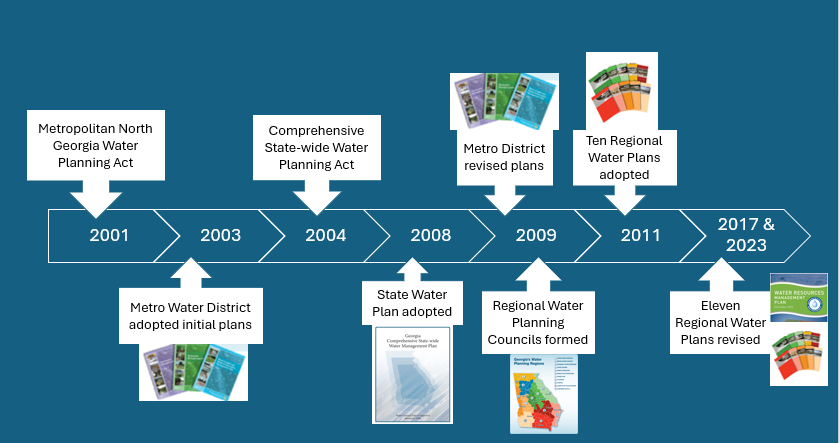
Enabling legislation has been important
SWP adopted by resolution of General Ass signed by the Gov.
Statutory differences: Councils and Metro Districts
Note: MD now doing 1 plan versus multiple
Policy Statement
Georgia manages water resources in a sustainable manner to support the state's economy, to protect public health and natural systems, and to enhance the quality of life for all citizens
Comprehensive Statewide Water Management Planning Act (2004)
Water Resources in Georgia: Surface Water
Surface Water Resources Map of Georgia
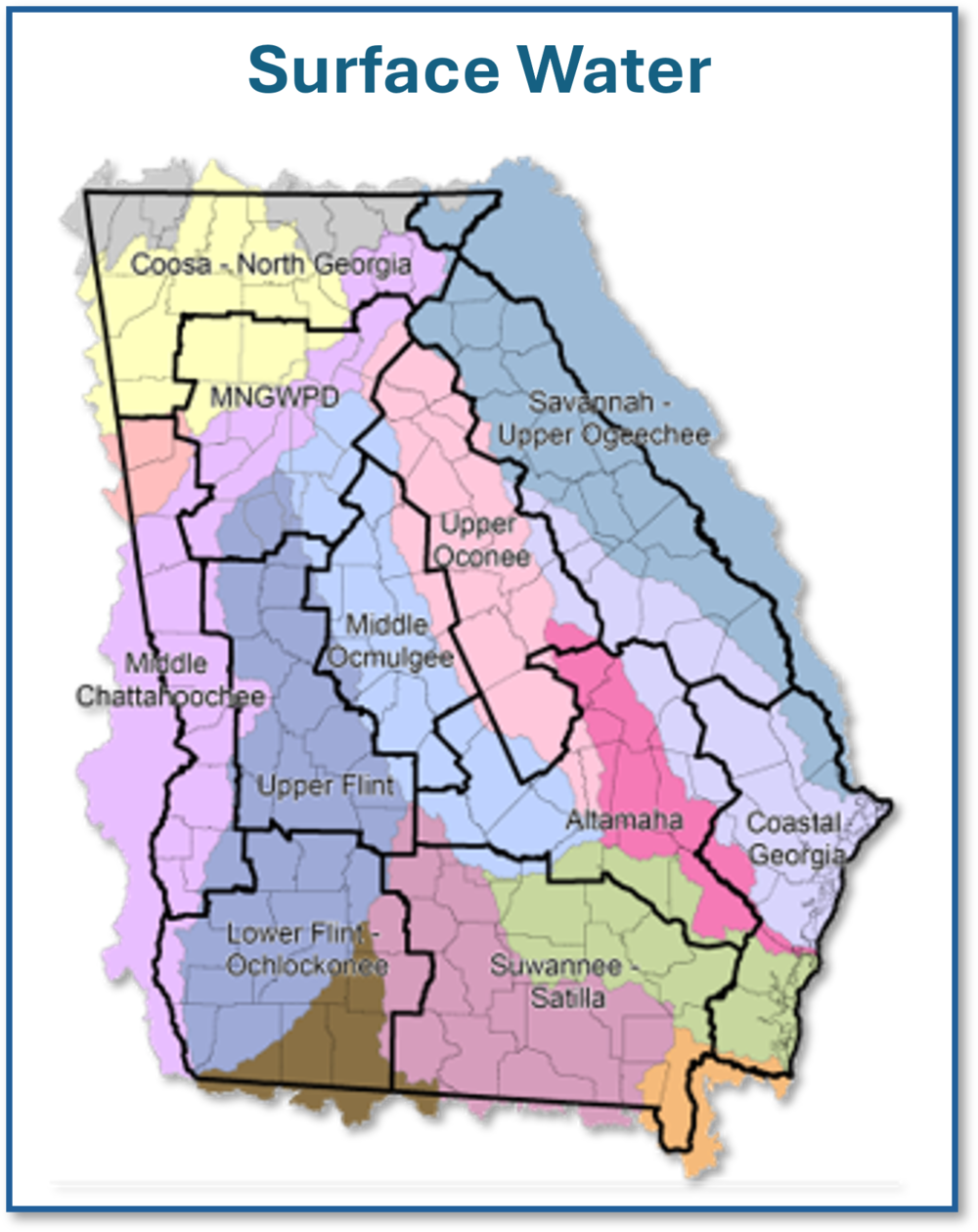
Water Resources in Georgia: Groundwater Aquifers
Groundwater Aquifers Map of Georgia
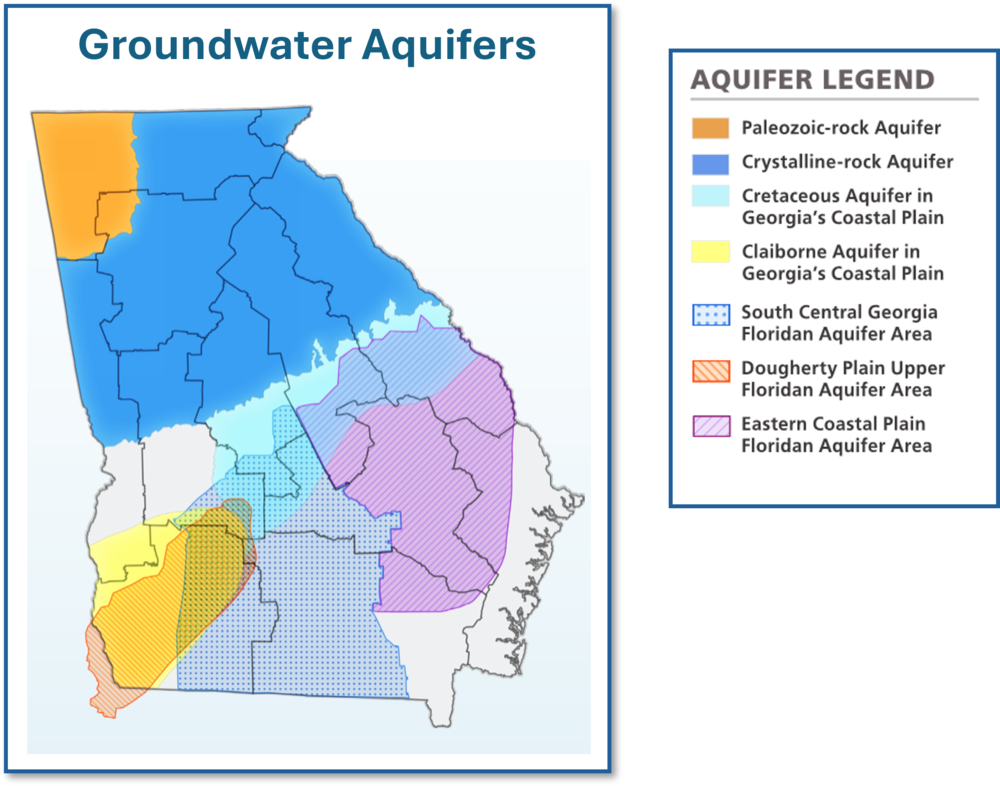
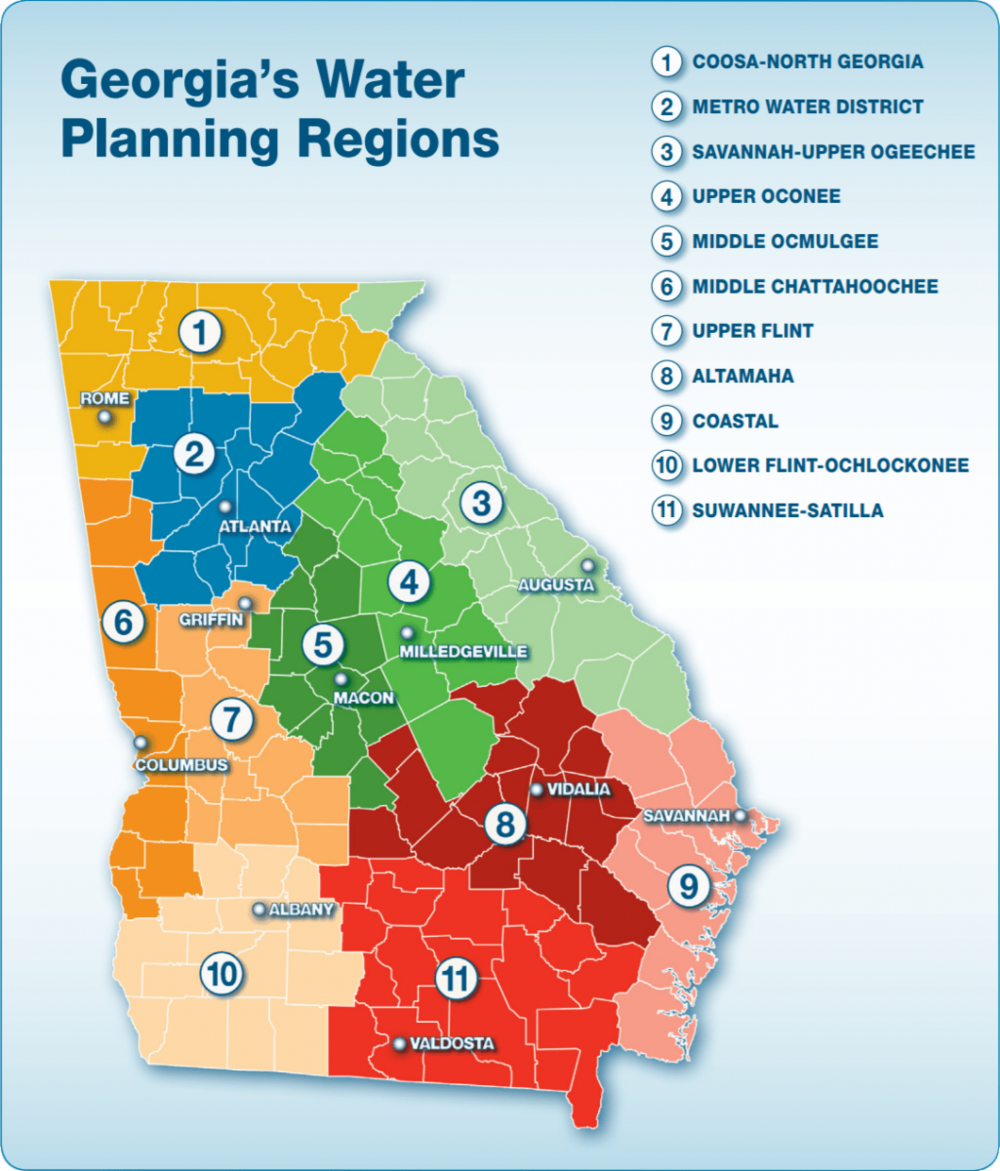
Water Planning Regions Map
Regional Water Planning Regions Map
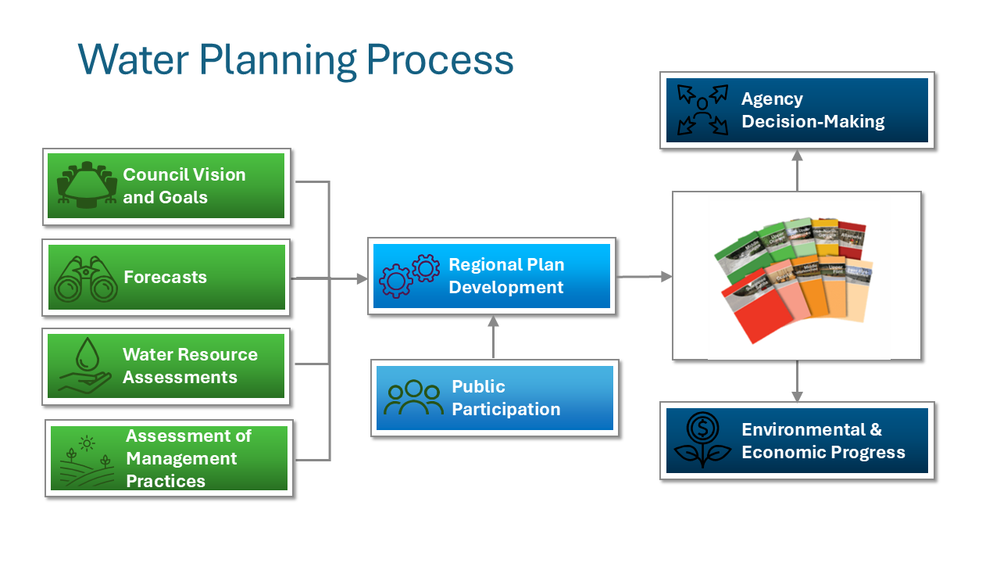
Regional Water Planning Process
Here's a high-level view first and then we will go into more detail on some components in the next slides.
Councils guide process with EPD support and feedback. It begins with the vision and goals, which reflect the CSWPA policy statement from the earlier slide.
Then two products from EPD provide technical foundations for the plan. Resource Assessments results indicate whether resources have the capacity to meet demand as well as the vision and goals. They also assess where there are shortfalls and what management practices are needed. Councils then assess and revise management practices. The guide includes the vision and goals, management practices, plus feedback on the technical pieces from EPD. Those are the main components. The others will be discussed during plan revision (ex: recommendations to state).
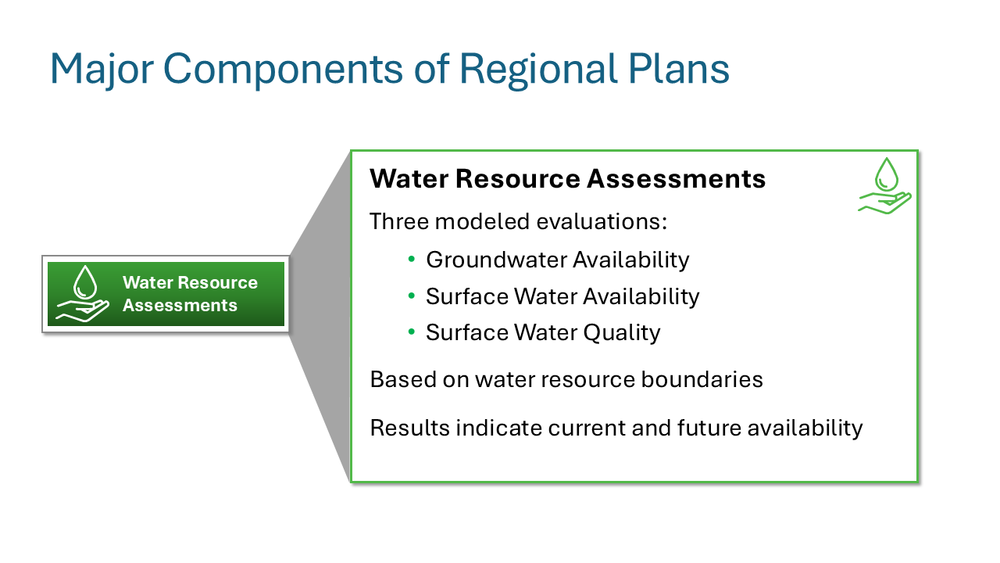
Major Components of Regional Plans - Water Resource Assessments
Second building block of sustainable management: Evaluation of the resource and its capacity to meet projected demand
Groundwater: estimated range of SY for groundwater sources
Surface Water: capacity of surface water resources to 1) meet water supply needs for municipal, industrial, agricultural, and thermoelectric power use; 2) flow available to assimilate projected wastewater
Water Quality: capacity of Georgia’s surface waters to accommodate pollutants without unacceptable degradation of water quality, i.e., without exceeding state water quality standards or harming aquatic life. Example: Dissolved Oxygen.
The assessment also looks at capacity to meet Demand for assimilation of treated wastewater. These are modeled assessments that are evaluated for current and future conditions to identify any shortfalls.
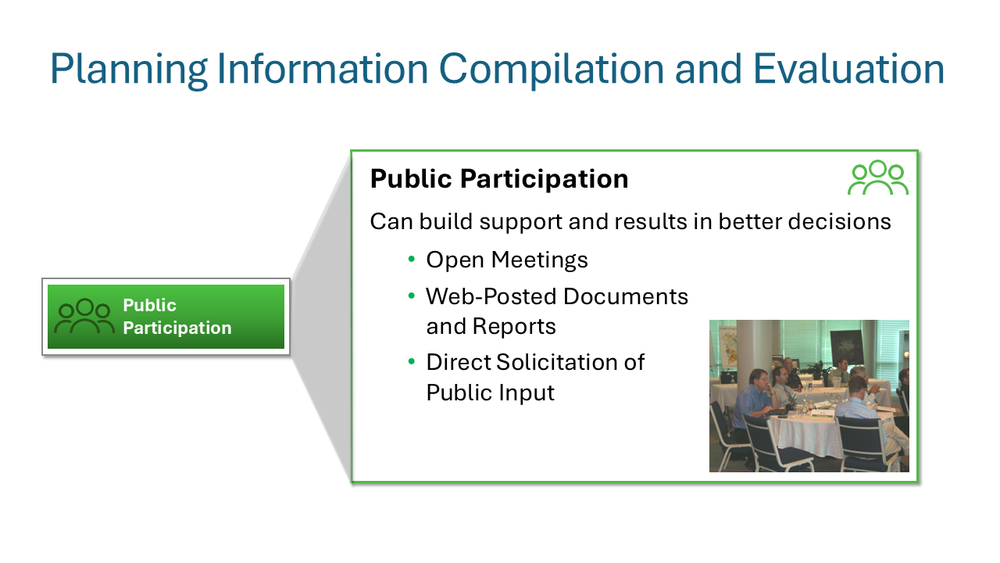
Planning Information Compilation and Evaluation
Planning council members bring perspectives of local governments, water users, and other water-related interests.
Public input: includes local governments, other state or federal agencies and the general public provide input during the planning process.
Approved Regional Plan
Submit recommended plan to EPD for approval.
The plans are used in EPD and GEFA agency-decision making processes.
Also provides early-warning info and management recommendations for permit holders and other implementers re: environmental management and meeting demand in ways that support economic development.
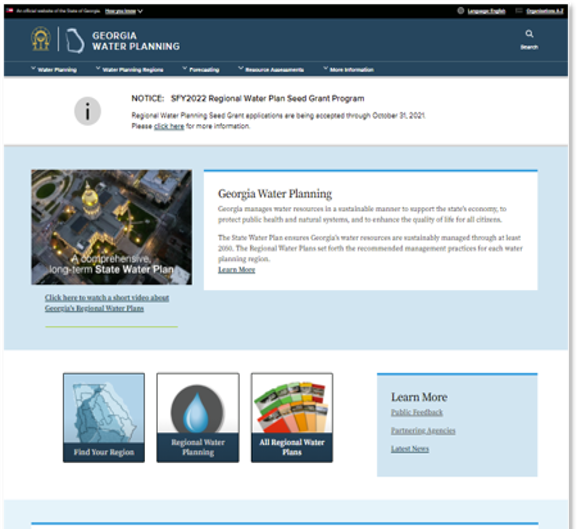
Georgia Water Planning Website
Georgia Water Planning Website
- Short video overview
- State Water Plan
- Forecast dashboard
- Resource assessments
- Regional water plans
- Upcoming and past meetings
waterplanning.georgia.gov
Plan Revision Process
Georgia’s future relies on the sustainable management and protection of the state’s limited water supplies. The 2004 Comprehensive State-wide Water Management Planning Act mandates the development of a state-wide water plan that supports a far-reaching vision for water resource management. The plan
Regional Water Planning Guidance
The Regional Water Planning Guidance provides details for regional planning councils to use while preparing regional water plans. EPD may periodically update this document and/or issue supplemental guidance to ensure the regional Water Planning Councils have the necessary information.
Currently, state and federal statutes form the foundation for Georgia’s water management programs. The goals of the Comprehensive State-wide Water Management Planning Act are aligned with the collective goals of other statutes related to water resource management. Two goals that resonate throughout federal and state statutes can be summed up as:
- Protect public health and environmental quality; and
- Meet future needs while protecting aquifers, instream uses and downstream users.
Georgia EPD
Georgia EPD
•Provide liaison to Council
•Ensure consistency with the State Water Plan
•Maintain schedule and budget for plan revision
Other Participants
Regional planning contractors
- Provide technical and planning support to Council
- Prepare Plan following Council guidance
Local governments, other agencies, general public
- Provide input during planning process
Other water planning councils
- Coordinate on plan provisions for shared water resources
Steps in the Review and Revision of the Regional Water Plan
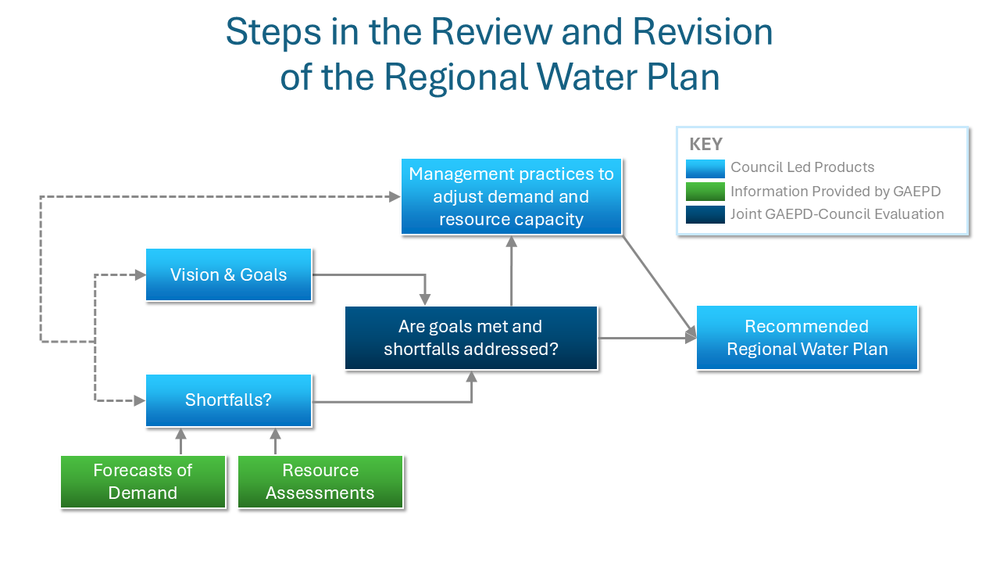
The above graphic shows the steps in the Review and Revision of the Regional Water Plan. Georgia EPD provides forecasts of demand and resources assessments. The assessments are evaluated to find shortfalls and make sure that the Vision and Goals are being met. This is followed by making sure the management practices are adjusted for demand and resource capacity. All of these steps result in a recommended Regional Water Plan.
Regional Water Plan Revision Cycle
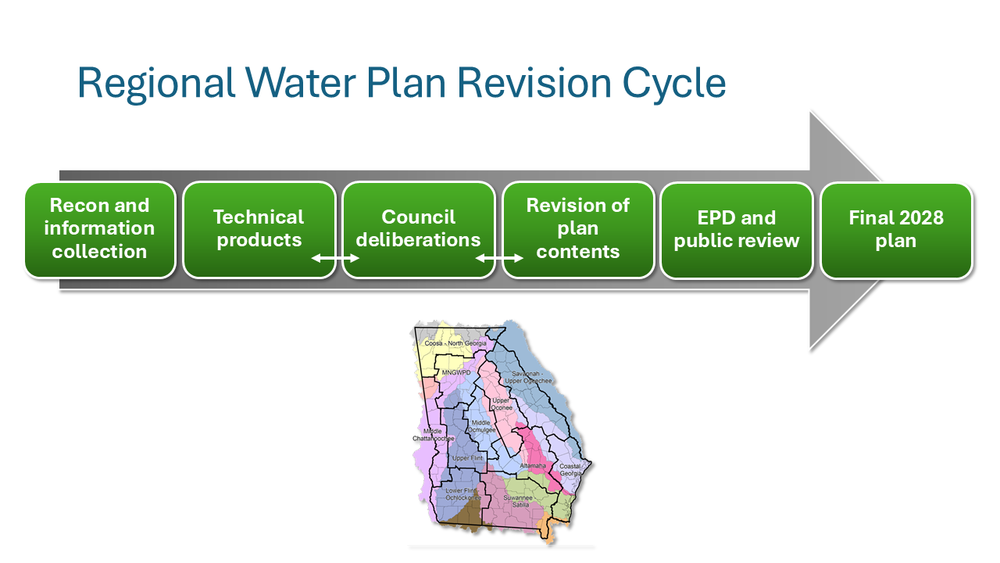
Regional Water Plan Revision Cycle. It begins with Recon and information gathering period. Most intensive work is during boxes two-four, which includes the technical products for review, council deliberations, and revision of plan contents. This is followed by EPD and public review period, and finally resulting in final 2028 plan. There will be considerable interaction with EPD and its contractors at the beginning with population projections to get final population projects spring 2026, Fall 2026 will include demand forecasts and Resource Assessments. There will be concurrent work on revisions to each section. Early spring 2028 is the target for draft adopted plan ready for review. The final plans should be submitted to EPD by June 2028.